
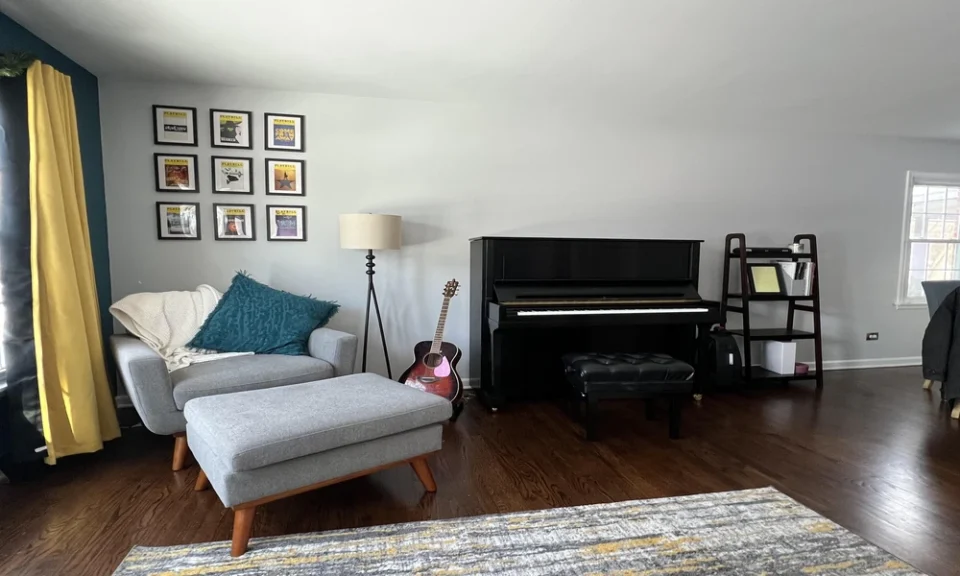
Home renovations are full of decisions: flooring, paint colors, lighting, and the question of where everything will go while the work is underway. The piano often gets an answer of its own: “We’ll just cover it and leave it in the corner.”
Sometimes that works. But if the renovation involves dust, changing humidity, disconnected heating or air conditioning, or a steady parade of contractors, the instrument deserves more careful planning. Its finish and internal components can be affected by the environment even when nobody touches the keys.
Can the Piano Stay in the House?
Start by considering the scope of the project. A small renovation in a distant room might allow the piano to remain in a stable, isolated part of the home. A whole-house renovation, major flooring work, or a project that interrupts climate control may be a different story.
Ask the contractor whether workers will need to move materials through the piano’s room, whether doors or windows will stay open, and how dust will be contained. Also ask if heating or cooling will remain dependable throughout the project. If the room cannot be protected from those changes, relocating the instrument may be the sensible choice.
Why a Blanket Is Not a Complete Plan
A cover can help shield the piano’s finish from ordinary surface dust. It cannot keep temperature and humidity constant, prevent every accidental bump, or protect an instrument from building materials stored alongside it.
Drywall sanding, floor refinishing, paint work, and major demolition each introduce different conditions. Even when the piano is not in the immediate work zone, fine dust can travel through connected rooms. A cover should be one part of a protection plan, not the only part.
In-Home Relocation or Off-Site Storage?
An in-home move may be appropriate when there is another room that stays secure, accessible, and environmentally stable. It can avoid the expense of transporting the instrument off-site, but it may create extra moving work if the renovation footprint changes.
Off-site, climate-controlled piano storage may be worth considering when the house will be unconditioned, dusty, or difficult to access. Ask the storage provider how the piano is handled, whether the space is controlled, how insurance applies, and what the pickup and return-delivery arrangements are.
Be careful with improvised solutions such as garages, porches, or unsecured storage spaces. They may not provide the stable conditions an acoustic instrument needs, especially during a long project.
The Timing Problem Most Homeowners Miss
Renovations routinely change schedules. A project expected to take three weeks may stretch longer because of materials, inspections, or unexpected repairs. If the piano is moved off-site, build flexibility into the plan rather than committing to return delivery before the contractor can confirm the room is ready.
Try to arrange pickup while doorways and halls are still clear. Before bringing the piano back, confirm that floors have been finished and cured as recommended by the installer, the room is clean, and the climate is stable again. The mover needs a safe route back in-not merely a promise that construction is nearly finished.
What Should a Storage Quote Include?
Monthly storage price is only part of the total. Compare pickup charges, minimum billing periods, return delivery, access arrangements, coverage, and any additional handling fees. Ask where the instrument will be kept and whether access is by appointment.
If the piano is particularly valuable, get an explanation of the applicable insurance or valuation terms in writing. Photographs and a condition record at pickup can also be helpful. A transparent quote makes it easier to compare storage with simply relocating the piano within your home.
For a combined move and temporary holding arrangement, a company experienced in piano moving and storage planning can help coordinate both legs of the job.
What About the Piano’s New Location?
A renovation is often an opportunity to choose a better long-term home for an instrument. Before it returns, think about direct sunlight, heating vents, exterior doors, moisture sources, and daily household activity. Plan room layout so the player has enough bench space and easy access for a technician.
If the instrument has spent time in a different environment, ask a qualified piano technician about tuning once it is back in place. There is no universal waiting period that fits every piano and renovation, so advice should reflect the actual circumstances.
A Simple Renovation Plan for Piano Owners
- Photograph the instrument and measure the route before demolition begins.
- Confirm whether climate control and room access will remain dependable.
- Decide early between a secure in-home location and off-site storage.
- Ask for a written quote covering the complete pickup-storage-return plan.
- Keep your return date flexible until floors, construction, and cleaning are finished.
- Prepare the final room and discuss any tuning needs with a technician.
Protect the Music, Not Just the Furniture
The piano may be the heaviest thing in the room, but it should not be the last item considered in a renovation plan. A little preparation can help preserve its condition and keep the instrument out of the way while the house changes around it.
When the last contractor leaves, the goal is simple: put the piano in its place and get back to playing.
About the Contributor: GrandGuard Piano Services provides piano-only moving, climate-controlled storage, and piano care throughout the Washington, DC, Maryland, and Northern Virginia region, with long-distance transportation coordination available nationwide.
